
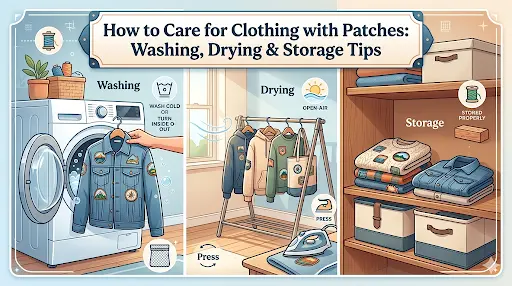
You know what hurts the most! Seeing your best friend leaving for abroad, for sure, but more than that, your fav patch peeling or fraying from your cosy hoodie and jacket. And to avoid such mishaps, one should follow the proper and standard ways for washing and should know how to care for clothing with patches.
Just as there are different fabrics, there are also several patches, each with its own unique wash and care cycle. So, to save you time researching from scratch, we have jotted down a comprehensive patch care NZ guide for your assistance. You will soon be aware of things like drying, ironing, how to wash clothes with patches, and how to store patched clothing after washing.
Why Patch Care Actually Matters
Patches may look tough, but they’re actually one of the most vulnerable parts of your clothing, because they’re an added layer stitched or bonded onto fabric. Without the right patch washing tips and care, even a great-looking patch can wear out faster than the garment itself.
Patches can survive washing, climate, and heat, but only if you take care of them in the right way. Poor care can lead to:
- Iron-on adhesives weaken, that cause edges to lift or peel
- Embroidery threads fade, snag, or slowly unravel
- PVC patches warping or stiffening when exposed to high heat
- Leather patches get dry, and they start to crack after a while
- Decorative patches, like chenille, appliqué, sequin and woven ones can lose their shape and finish.
A best quality patch from the best supplier with strong stitching, high quality threads, or durable backing will naturally hold up better over time. But even the best quality patch won’t last long if it’s constantly exposed to harsh washing, heat, or climate without proper care.
New Zealand’s variable climate only adds to the problem. Auckland’s humid summers and Wellington’s salty coastal air, moisture, and environmental exposure can speed up the wearing out of your patches.
Know Your Patch Type Before You Wash
When trying to wash clothes with patches, people often make a mistake. They think all patches are the same. That is not true. Each patch is made differently and has different custom patch backing. If you use the wrong method to wash clothing with a patch, it will not last very long.
Here’s a clear breakdown of the patch care guide NZ approach:
Embroidered Patches
What they are: Raised thread designs stitched onto a fabric base.
How they’re made: Threads are machine-stitched onto a backing fabric.
Care guide:
- Gentle machine wash or hand wash
- Turn clothing inside out
- Avoid harsh spin cycles to prevent thread stress and patch edge fraying
- Iron-on versions: avoid high heat on the back adhesive
Iron-On Patches
What they are: They are embroidered or printed patches with a heat-activated glue backing.
How they’re made: A thermoplastic adhesive layer is added to the back of the patch.
Care guide:
- Wash in cold or lukewarm water
- Avoid tumble drying (heat weakens adhesive)
- Do not re-iron repeatedly
- Air dry only for best longevity
Woven Patches
What they are: Flat, tightly woven thread designs with fine detail.
How they’re made: Thin Threads are woven together like fabric instead of stitched on top.
Care guide:
- Gentle wash recommended
- Use a mesh laundry bag patches method for protection
- Watch edges to prevent fraying
PVC / Rubber Patches
What they are: Flexible, slightly raised plastic/rubber-style patches.
How they’re made: Liquid PVC is molded into shapes and heat-cured into a solid flexible form.
Care guide:
- Very water-resistant, washing is fine
- Avoid high dryer heat (can warp or soften)
- Never iron directly
Leather Patches
What they are: decorative patches made with natural or faux leather.
How they’re made: Leather pieces are cut, stamped, engraved, or embossed.
Care guide:
- Do NOT machine wash
- You can simply clean them with damp cloth
- Do not use harsh detergents or soak them in water
- Condition occasionally to prevent cracking
Velcro-Backed Patches
What they are: Removable patches with hook-and-loop backing.
How they’re made: Patch is stitched or bonded to a Velcro backing strip.
Care guide:
- Always remove before washing
- Wash separately if needed
- Prevent lint buildup on the Velcro side
Chenille Patches
What they are: Soft, fluffy varsity-style patches with a textured look.
How they’re made: Looped yarn is stitched onto a felt base to create a raised fuzzy surface.
Care guide:
- Hand wash or gentle cycle only
- Avoid friction (can flatten texture)
- Air dry to maintain fluffiness
Sequin Patches
What they are: Decorative patches covered in small shiny discs.
How they’re made: Sequins are stitched or glued onto a fabric base in patterns.
Care guide:
- Best washed in a protective mesh bag
- Prefer hand washing
- Avoid spin cycles that loosen sequins
Appliqué Patches
What they are: Fabric shapes sewn onto another fabric layer.
How they’re made: One fabric piece is cut and stitched onto a base fabric for a layered effect.
Care guide:
- Gentle wash to protect edges
- Check stitching before washing
- Avoid high agitation that causes lifting
Sublimated Patches
What they are: Smooth printed patches with no raised texture.
How they’re made: Dye is heat-transferred into fabric fibers for printing.
Care guide:
- Cold wash only for patch fading prevention
- Avoid direct sunlight drying
- Do not use high heat
How to Wash Clothing with Patches
The most important part is how to wash clothes with patches, if you want your patches to last a long time you must follow patch washing tips. Patches do not get damaged when you wear them, they usually get damaged when you wash them without proper care.
For patch edge fraying, patch fading prevention or to avoid patch adhesive weakening and to keep every type of patch safe, you should follow the below standard routine.
The Standard Washing Routine (Works for Most Patch Types):
-
Pre-wash check
Before you put clothes with patches on into the washing machine, you should take a look at your patches. Check your patch edge fraying or corners that are coming out. For embroidered patch care, look for threads on your patches. If you find any problems with your patch, you should fix them first, do not wait until after you have washed your clothes.
-
Turn your clothes inside out
This helps prevent the patch from getting worn out and protects the embroidery and printed designs on the clothes from fading. By doing this, you reduce friction on the surface of the patch and keep the edges from getting damaged and loosening.
-
Use a mesh laundry bag
Using mesh laundry bag patches stay safe during the wash cycles. It stops snagging and reduces friction from other clothes in the load.
-
Cold water only
Hot water can really damage patches. It weakens the glue on iron-on patches. It also makes colours look washed out and causes threads to break and snag.
-
Gentle cycle only
Always choose the delicate or gentle wash settings when you are washing clothes with patches. The heavy-duty cycles are too rough for patches, they can damage the edges of the patch.
-
Mild detergent only
The detergent should not be harmful for colours and should not have bleach in it. You should be sure of that it does not have anything like brighteners, enzymes, or fabric softeners. These things make the bonding weak over time, which will cause the patch to fall out of the clothes.
-
Don’t overload the machine
When you overcrowd the machine, the load causes friction. This makes the edges of patches get fuzzy and frayed.
Patch-Type Washing Variations
Embroidered Patches
- They are safe with your washing routine.
- For stains, you can use a soft toothbrush with mild detergent mixed with cold water to clean.
- You should avoid scrubbing too hard to prevent the threads from damaging.
Iron-On Patches
- Iron on patch washing instructions include following your washing routine carefully.
- Wait 24 hours before washing for the time after applying the patch.
- Keep the adhesive away from heat to stop it from peeling off.
Woven Patches
- embroidered patch care applies on them too
- They may be durable but still require care, so use gentle wash cycles.
- Be careful, the edges might wear out over time.
PVC / Rubber Patches
- PVC patch washing can be done in a machine on a gentle cycle.
- You should avoid applying any heat on them whether from a dryer or an iron.
- They can become soft and can wrap due to high heat.
Leather Patches
- You should hand wash them instead of a machine washing .
- You can simply clean them with a damp cloth.
- Let them dry in natural air and avoid soaking them in water or using detergents.
Velcro-Backed Patches
- Always take them off before washing.
- If needed, wash them separately.
- This will prevent them from being damaged.
Chenille Patches
- You should hand wash them or use a gentle cycle setting if you are washing them in a machine.
- Avoid rubbing and scrubbing at all costs to prevent the fuzzy texture from flattening.
- You should not dry them in a dryer instead dry them in open air to keep them soft and in shape.
Sequin Patches
- Put it in a mesh laundry bag for safety.
- Prefer washing by hand.
- Avoid spin cycles, as they can detach sequins.
Appliqué Patches
- Wash gently with hands or gentle cycles.
- Check the edges before washing to prevent lifting.
- Avoid washing that can cause peeling or curling.
Sublimated Patches
- Wash in water to prevent patch fading.
- You should avoid exposing them to high heat and direct sunlight.
- Avoid using bleach or strong detergents so the print does not fade.
Hand Washing (Safest Method for Delicate or Valued Items)
If you have gear or heavily detailed patches, you should use hand washing because hand washing is gentle on these kinds of items. Here is how to wash clothes with patches by hands:
- First fill some cold water in a tub and add some mild detergent in it.
- Put and gently squeeze the garment into the water.
- Keep not scrubbing the patches in mind.
- Leave the garment for 10 to 15 minutes in water.
- Wash it with cold and clean water thoroughly.
- To get rid of excess water without twisting the garment, place it in between the towel to absorb the water.
- Then place or hang the garment in open air to let it dry completely.
This way, you can keep your patched items safe. Hand Washing is gentle for clothes with patches only if done the right way.
Drying Patched Clothing (What to Do and What to Avoid)
Air Drying Is Always Best
-
Hang your garment or place them flatly on a dry and clean towel.
- The garment should be placed in an area with better air circulation .
- Do not place the garment under direct sunlight if possible. The UV rays in direct sunlight can make tear embroidery threads, make them fade and weaken the adhesives.
Note for kiwis: In Auckland’s summers, you do not need direct sunlight to dry your garments. A shaded and breezy spot works well for patch fading prevention.
If You Must Use a Dryer
- Use the lowest heat setting or just air.
- Put the garment in a mesh laundry bag patches or a pillowcase before putting it in the dryer.
- When the cycle is done, take the garment out without leaving it in the dryer for long
- Avoid the garment with a PVC or leather patch from putting it in the dryer
- Dry them in short cycles to avoid the constant heat and friction.
What You Should Avoid
- Avoid the high heat drying because it weakens the adhesives and can warp the PVC.
- Hanging heavy clothes like wet jackets can stretch the fabric and fray the patch edges so avoid it.
- Direct sunlight can cause the embroidery threads to break and make the prints and colours to fade. That is why you should not place clothing under direct sunlight.
- Do not stress on the fabric by twisting it can affect the patch bonding, which will result in falling out of your patch.
Ironing After Drying
- Iron-on patch washing instructions include turning clothes inside out before ironing.
- Put a clean cloth over a patch when ironing around it
- Iron with a low heat setting.
- Never iron directly on PVC, leather, chenille or sequin patches.
Especially in humid or coastal climates in New Zealand, following the proper drying guide is important for patch care NZ.
How to Store Clothing with Patches
General Storage Rules
- Instead of using plastic bags, you should use fabric garment bags to store the garments.
- Always put the garments in storage when they are completely dry and clean and when they do not have any moisture left in them.
- You should keep the garments in a dry and cool place where direct sunlight can not reach.
Folding vs Hanging
- Hang heavy garments like jackets, uniforms, and workwear.
- Fold the light garments.
- Make sure you fold in a way so that the patch does not fold.
- For long term storage, place acid free tissue paper between the folds.
Climate Tip for Kiwis
New Zealand’s climate can be tough on stored clothing. In Auckland humidity patch storage can be difficult and coastal areas, salty air can wear out patches or garments that are not even being used.
- Put silica gel packets with garments in the wardrobe or storage boxes.
- It absorbs the unwanted moisture and protects the garment and patch backing
- It is specifically useful for caring for patches New Zealand conditions all around the year.
Common Patch Care Mistakes to Avoid
- Do not wash in hot water.
- Do not put your garments in the washing machine with the front side out.
- Do not put your clothes in the dryer on a high heat setting.
- Do not use bleach or detergents that might be harsh on fabric or patch materials.
- Do not let it slip from your mind to put a cloth over the patch before ironing.
- Do not store the garments when they are still wet.
- Do not make the habit of regularly using fabric softeners.
- Do not forget to check the patches for fixing before the wash.
Quick Reference Patch Care Table (Visual Element)
Bookmark this table for laundry day.
| Patch Type | Machine Wash? | Water Temp | Dryer Safe? | Iron Safe? | Special Notes |
| Embroidered (sew-on) | Yes | Cold | Low heat only | Yes (reverse side) | Use mesh bag |
| Iron-On | Yes | Cold | Low heat only | Yes (with cloth) | Wait 24h after application |
| Woven | Yes | Cold | Low heat only | Yes (reverse side) | Avoid harsh agitation |
| PVC / Rubber | Yes | Cold | No | No | Never iron directly |
| Leather | No | N/A | No | No | Spot-clean only |
| Velcro-Backed | Remove first | N/A | Remove first | No | Hand wash separately |
| Chenille | Yes (gentle) | Cold | No (air dry best) | No | Avoid friction, keeps texture intact |
| Sequin | Yes (protected) | Cold | No | No | Use mesh bag, avoid spin cycles |
| Appliqué | Yes (gentle) | Cold | Low heat only | Yes (reverse side) | Check edges before washing |
| Sublimated | Yes | Cold | Low heat only | No (avoid heat) | Prevent fading, avoid sunlight |
When to Re-Attach or Replace a Patch
- You can re-press the iron patch for about 10 to 15 seconds when its edges start to lift to stop the patch from detaching further.
- If loose threads are coming out of your embroidery patch, snip the threads without pulling and apply a little dab of clear fabric glue to stop the thread from loosing further.
- If your iron on patch has detached fully it can be reattached at home with heat.
- Your embroidery patches can be reattached with a quick stitch around the border at home.
- If your patch is badly faded or comes undone or has dishevelled fully it is better to replace it with a new one.
If you need custom patches for businesses, branding and promotion in New Zealand, with full guidance for kiwi, Patch Makers NZ is the best choice, for long term durability of NZ work wear, uniforms and apparel patches.
FAQs
Planning to Add Custom Patches to Your Team’s Gear or Workwear?
If you are planning to get custom patches for your team’s gear, work wear or apparel, the first thing you should know about is caring for patches New Zealand. Many people ask ”do patches survive the wash”, yes they do but only if you follow patch washing tips, patch longevity tips, and Kiwi patch care guide properly. The patch care table provided in this guide can be your life saver, you can simply bookmark and save it for later use.
If you’re looking for custom patches in New Zealand, Patch Makers NZ can provide high quality patches made in NZ that can survive all kiwi conditions.